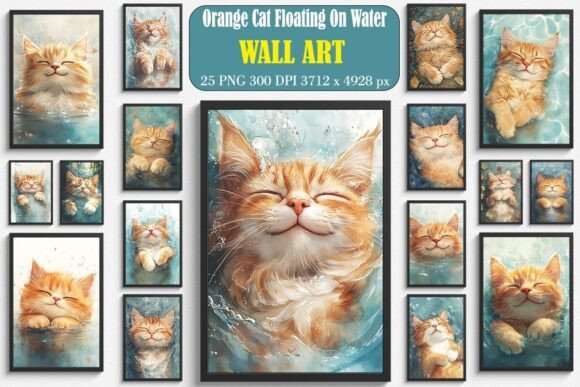
Happy Orange Cat Floating on Water Art Bundle
When I first opened the Happy Orange Cat Floating on Water Art Bundle, I didn't just see a cute image; I saw a potential bestseller for a summer collection. As someone who has spent years reviewing embroidery files and testing them on everything from heavy denim to delicate baby knits, my initial reaction is always practical: "Can this actually be stitched well?" The answer, after a quick mental simulation of the stitching process, is a resounding yes, provided you understand where this design fits in your workflow.
The mood of this bundle is undeniably cheerful and relaxed. It captures that specific summer vibe of lounging by the pool or drifting down a lazy river. For an embroidery designer, this translates to a design that screams "casual comfort." It isn't suited for formal corporate wear or high-end evening gowns. Instead, it belongs squarely in the realm of custom apparel, tote bags, and home decor items meant to bring a smile to the wearer's face. The visual personality is playful, making it an ideal candidate for personalized gifts or small shop merchandise targeting parents, cat lovers, and craft enthusiasts.
Real-World Application: From Digital File to Finished Product
Let's imagine a real scenario. You are preparing for a local craft fair or updating your Etsy shop for the upcoming season. You need a product that stands out but remains approachable. You decide to create a line of embroidered aprons and kitchen towels featuring the Happy Orange Cat Floating on Water Art Bundle. This is where the design truly shines.
The floating cat motif works exceptionally well on flat surfaces like apron pockets or tea towel centers. The shape allows for a generous amount of negative space around the subject, which is crucial for machine embroidery design. If you were to place this on a sweatshirt embroidery project, the large file dimensions (approx 3712 x 4928 pixels) ensure that even when resized to fit a standard chest pocket area, the details won't become muddy. However, if you attempt to use this as a tiny logo on a cap brim, you will run into trouble. The curves of a hat can distort the "floating" aspect of the art, making the water lines look wavy in an unintended way.
I also considered using this for a baby item, such as a onesie or a nursery blanket. The bright orange tones against a white or light blue background would pop beautifully, creating a high-contrast look that is visually engaging for infants. In this context, the design acts as a focal point that adds value to the finished product. Customers browsing a boutique looking for unique baby shower gifts would likely appreciate the whimsical nature of the design, feeling that it offers more character than a generic stamped pattern.
Navigating Technical Challenges and Fabric Choices
While the concept is strong, every embroidery file has its limitations. The Happy Orange Cat Floating on Water Art Bundle contains 25 PNG files, which gives you plenty of flexibility for different colorways and mockups, but it requires careful planning regarding stitch density and fabric texture. If you plan to stitch this on a tote bag design made of canvas, you must ensure the stabilizer is robust enough to support the weight of the thread without puckering. Canvas is a textured fabric, and if the grain is too open, the satin stitch edges might not lay flat, leading to a less professional finish.
Conversely, avoid placing this design on stretchy fabrics like thin jersey unless you have significant experience with stretch stabilizers. The movement of the fabric during stitching could cause the detailed corners of the cat or the water ripples to shift, resulting in misalignment. Similarly, dark fabrics present a challenge. Unless you are using a dense underlay or a specific technique to cover the base color, the orange hues might get lost against a black background. In these cases, a lighter background is almost always the safer bet to maintain the integrity of the thread colors.
Another critical factor is the hoop size. While the digital resolution is high, the physical embroidery area is finite. If you try to cram this entire composition into a small 4x4 inch hoop, you will lose the charm of the floating effect. The design needs room to breathe. I recommend testing the layout on scrap fabric first to confirm that the proportions remain balanced once transferred to the actual garment. This step is non-negotiable for any serious commercial embroidery project.
Visual Appeal and Customer Trust
In the world of handmade products, visual clarity is directly tied to customer trust. A poorly stitched design looks cheap, regardless of how cute the original artwork is. The Happy Orange Cat Floating on Water Art Bundle avoids common pitfalls like excessive detail in areas that cannot hold fine stitches. The rounded shapes of the cat and the flowing lines of the water are forgiving, meaning they tolerate minor variations in tension better than sharp, angular designs.
This reliability enhances the perceived value of your handmade product. When a customer receives a tote bag or a pillow cover with crisp, clear stitching, they associate that quality with your brand. It signals professionalism and attention to detail. Furthermore, the playful theme encourages social sharing. People love posting photos of their cute pets or fun accessories online, and a well-executed embroidery piece featuring a happy cat is highly shareable content. This organic marketing potential is a hidden benefit of choosing the right design assets.
However, caution is required when considering decorative accents or tiny lettering alongside the main image. If you add text to the design, ensure it is legible and not competing with the cat for attention. The focus should remain on the central character. Also, consider the longevity of the project. Items that require frequent washing, like kitchen towels or children's clothing, need durable stitching. The fill stitch areas should be dense enough to withstand friction but not so dense that the fabric becomes stiff and uncomfortable.
Essential Designer Notes Before You Stitch
Before you commit this embroidery project to production, there are several checks you must perform. First, review the stitch density in your digitizing software. Even though the source files are high-resolution, the conversion to machine code determines the final outcome. Ensure that the running stitch and applique design elements (if applicable) are optimized for the fabric type you intend to use.
Test the design in black and white mockups to verify contrast. Sometimes colors look vibrant on screen but wash out when rendered in thread. Compare how the orange cat appears on both light and dark backgrounds to determine the best color palette for your finished product. Additionally, inspect small details closely. Are there any isolated threads that might snag? Is the spacing between elements sufficient to prevent thread breaks?
Finally, confirm the licensing terms. Many sellers assume that buying a digital bundle grants commercial rights for all products, but this varies. Check whether you are allowed to sell the embroidered patch or the custom apparel made with the Happy Orange Cat Floating on Water Art Bundle. If you are a Etsy seller or running a craft business, understanding these boundaries protects your income stream.
By treating this bundle not just as a picture but as a technical blueprint for a tangible item, you set yourself up for success. The Happy Orange Cat Floating on Water Art Bundle offers a delightful opportunity to create memorable pieces, but only when approached with the same rigor and care as any other professional digital embroidery file. With the right preparation, this design can elevate your inventory and delight your customers with its sunny, aquatic charm.